What to Tell Your Barber When Getting a Skin Fade for the First Time
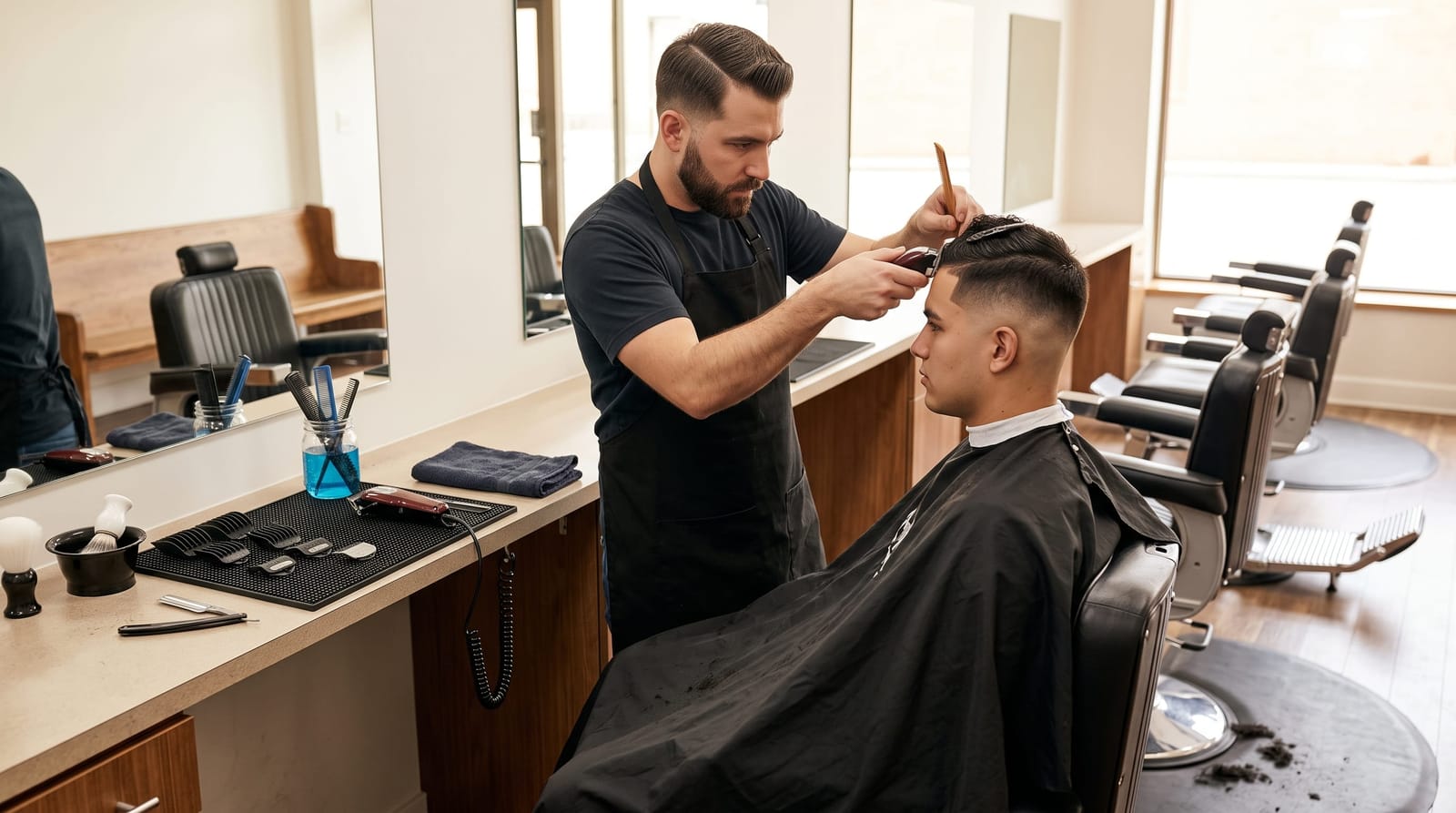
Walking into a barbershop for your first skin fade can feel intimidating, especially when you don't know the lingo. You know what you want to look like, but translating that vision into words your barber can actually work with is a different story. This guide breaks down exactly what to tell your barber for a skin fade, step by step, so you can walk in confident and walk out with a cut you'll actually love.
Step 1: Start With the Fade Height
The very first thing your barber needs to know is how high you want the fade to travel up your head. This single decision shapes the entire look of your cut, so it's worth understanding the three main options before you sit in the chair.
- Low fade: The gradient starts just above the ear and the neckline. Clean and subtle: great for professional environments or guys who prefer a more conservative look.
- Mid fade: Starts around the temples and middle of the head. The most versatile option and, not coincidentally, one of the most requested fades in barbershops across Florida right now.
- High fade: The fade begins near the top of the sides, creating maximum contrast. Bold, sharp, and modern: best for guys who want a statement cut.
When you sit down, lead with one of these three terms. Saying "I want a mid fade skin fade" immediately gives your barber a clear starting point. If you're unsure which height suits your face shape or lifestyle, ask: a good barber will spend 60 seconds helping you decide. For a deeper breakdown of how these options compare, check out this guide on low fade vs mid fade vs high fade before your appointment.
Step 2: Clarify the Top: Length and Style
A skin fade is defined by what happens on the sides and back, but your barber also needs to know what to do with the hair on top. This is where a lot of first-timers go quiet, and then end up with a top that doesn't match their expectations.
Use these simple reference points when describing length:
- "About an inch": short and low-maintenance on top
- "Two inches" or "finger-length": medium length, leaves enough to style
- "Keep most of the length on top": longer top for styles like a textured crop, quiff, or slick back
Beyond length, tell your barber whether you want the top left with natural texture or cut blunt and clean. Phrases like "keep it textured" or "I want a choppy, natural finish" communicate a lot. If you want a specific style, a pompadour, a French crop, a comb-over fade, say the name. According to barbers across the industry, roughly 70% of miscommunication during haircuts happens because clients describe only the sides and never mention the top.
Step 3: Bring a Reference Photo (Seriously, Do This)
No amount of verbal description beats a clear reference photo. Studies on communication in creative service industries consistently show that visual references reduce revision requests by more than 50% compared to verbal descriptions alone. A photo eliminates guesswork and gives your barber an actual target.
Here's how to use photos effectively:
- Find 2-3 photos, not just one. One image shows the front, another might show the side profile or back. Together, they give your barber a complete picture.
- Choose photos of men with a similar hair texture to yours. A skin fade on thick, coarse hair looks different than the same cut on fine, straight hair.
- Be honest about what you like and don't like. If you love the sides in one photo but prefer the top from another, say so. Barbers appreciate specifics.
Save the photos to your phone before your appointment: don't rely on finding them in the chair. And if you're scrolling Instagram or Pinterest, look for angles that show the fade line clearly. A blurry photo shot from a distance won't help either of you.
Step 4: Describe Your Lifestyle and How Much Time You'll Spend Styling
A great barber doesn't just cut hair: they cut hair that fits your real life. Florida's heat and humidity mean that a style requiring 20 minutes of product and blow-drying every morning might not be realistic for most guys. Be upfront about this.
Tell your barber:
- How much time you have in the morning. "I spend about 5 minutes on my hair" is completely valid information.
- Whether you use product. If you've never touched pomade in your life, a slick-back fade might not be the right call, at least not yet.
- Your job or activity level. If you work outdoors in Florida's heat or hit the gym daily, your barber can recommend a lower-maintenance cut that still looks sharp.
- How often you plan to come back. Skin fades are high-definition cuts: the tight gradient can start looking grown out in as little as 2-3 weeks for some hair types. If you can only come in every 6 weeks, your barber might adjust the approach slightly. You can read more about timing in this breakdown of how long does a skin fade last before scheduling your next visit.
This context helps your barber recommend a skin fade variation that actually works for your day-to-day life, not just for your Instagram photo.
Step 5: Confirm the Finish: Lines, Texture, and Final Details
Before your barber picks up the clippers, confirm a few finishing details so there are no surprises at the end:
- Hard part or no hard part? A hard part is a shaved line cut into the side of the hair to define a part. It's sharp and deliberate, not everyone wants one.
- Shape-up or natural hairline? A shape-up squares off the hairline at the forehead and temples for a defined, geometric look. If you're not sure, ask to see what it would look like.
- How sharp do you want the neckline? A straight neckline looks clean right after a cut but may show regrowth faster. A tapered or "natural" neckline blends more gradually.
These are small details that make a huge difference in the final result. Don't skip them just because you feel like you're asking too many questions. Barbers ask about these things because they matter, and most clients don't bring them up until after the cut is done.
Frequently Asked Questions
What if I don't know the exact terminology for what I want?
That's completely fine: that's what the photo is for. Bring a reference image and describe in plain language what you like about it. A skilled barber can translate "I want the sides really tight and faded out" into the right technique without you needing to know guard numbers or technical terms.
Should I come in with clean, dry hair or should I wash it first?
Most barbershops prefer you arrive with clean, dry hair. Wet or product-heavy hair can be harder to assess and cut accurately. If you're unsure, call ahead and ask: different shops have different preferences.
What if I'm unhappy with the cut midway through?
Speak up immediately. It's much easier for a barber to adjust during the cut than after it's finished. Barbers are not mind readers, if something looks off to you, say so politely in the moment. A professional will always appreciate the feedback.
How short does a skin fade actually go?
A true skin fade, sometimes called a bald fade, tapers completely down to bare skin at the lowest point. This is different from a standard taper or a #1 fade, which leaves a small amount of hair at the base. If you want it to go all the way to skin, use the word "skin fade" or "bald fade" explicitly so there's no ambiguity.
You're Ready: Now Just Show Up and Communicate
Getting your first skin fade doesn't have to be stressful. Walk in knowing your fade height (low, mid, or high), bring a reference photo, have a rough sense of your top length, and be honest about your lifestyle. That's genuinely all it takes to have a productive conversation with your barber. The more clearly you communicate upfront, the more consistently great results you'll get, not just the first time, but every time you sit in the chair.