Male Regular Haircut vs. Skin Fade: Which Is Right for You?
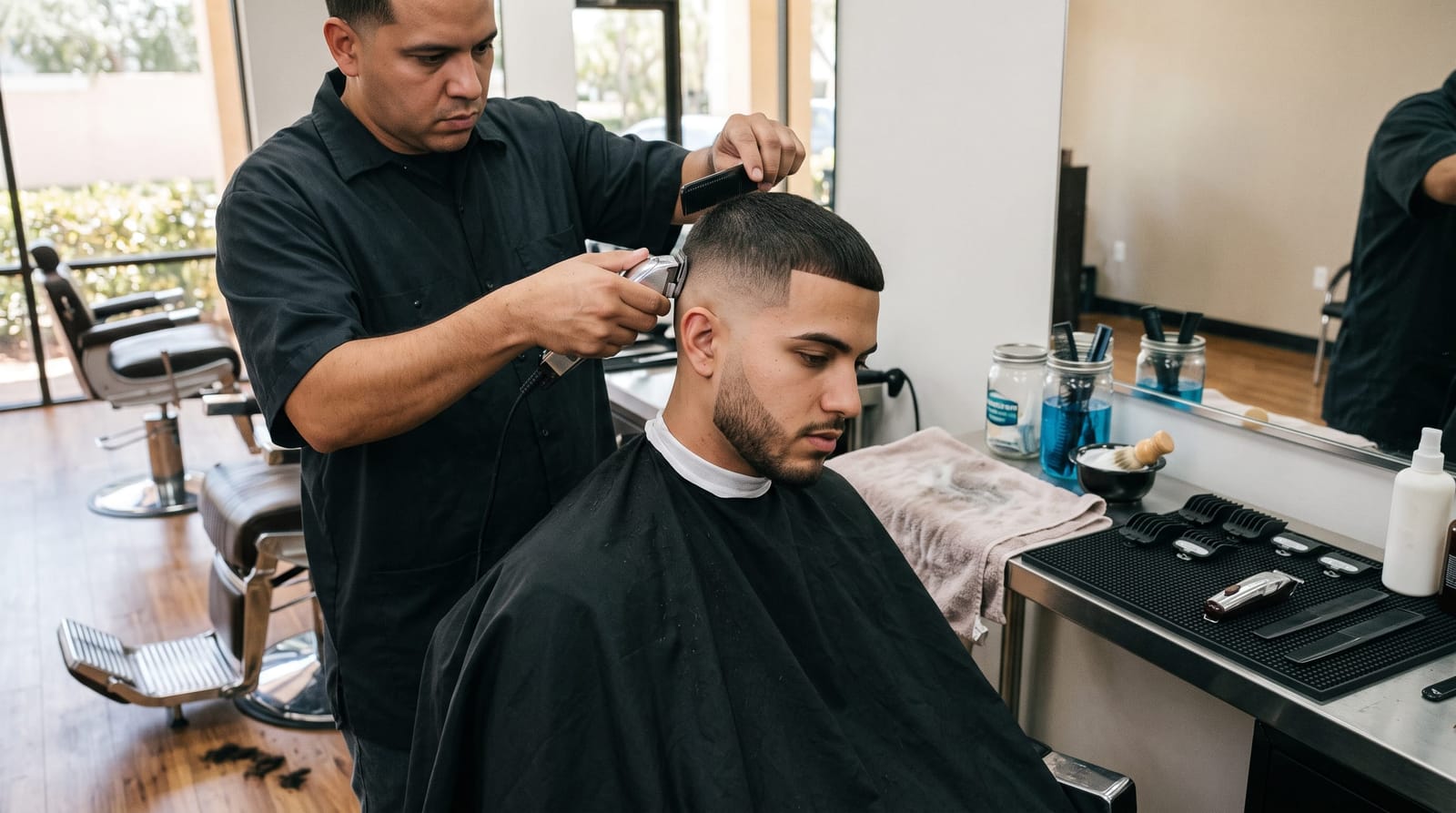
Choose a regular haircut if you prefer some coverage on the sides, a softer outline, and less pressure to keep a freshly shaved finish. Choose a skin fade if you want bare skin at the shortest point, a defined transition, and stronger contrast between the sides and top.
The important distinction: a skin fade describes how the sides and back are cut, not how long the top has to be. You can wear a similar textured top, side part, or short crop with either option.
Within the broader topic of men’s haircuts and skin fades, this comparison helps settle a practical question: which cut will look right not only when it is fresh, but throughout your routine? Here is how a male regular haircut vs. skin fade compares in technique, styling, maintenance, and cost.
Regular Haircut vs. Skin Fade at a Glance
| Feature | Regular Haircut | Skin Fade |
|---|---|---|
| Sides and back | Retain visible hair, with length chosen during the consultation | Reach bare skin at the shortest point before blending into longer hair |
| Overall effect | Softer contrast and more coverage | More defined contrast, depending on fade height |
| Top options | Short, textured, parted, or longer styles | Short, textured, parted, or longer styles |
| Cutting priorities | Balanced shape, controlled weight, and a clean connection between lengths | A smooth skin-to-hair transition and a balanced connection to the top |
| Grow-out | Does not depend on maintaining a bare-skin finish | The freshly shaved contrast changes as hair becomes visible again |
| Daily styling | Depends mainly on top length, texture, and desired finish | Also depends mainly on the top, not simply on having faded sides |
| Cost comparison | Check the current service price and what is included | Check the service price, then consider your preferred refresh frequency |
Neither is automatically more professional or more stylish. A clean, high-quality result comes from matching the shape to your hair and keeping the finish intentional.
Technique: Retained Coverage vs. a Skin-Level Blend
What a regular haircut means
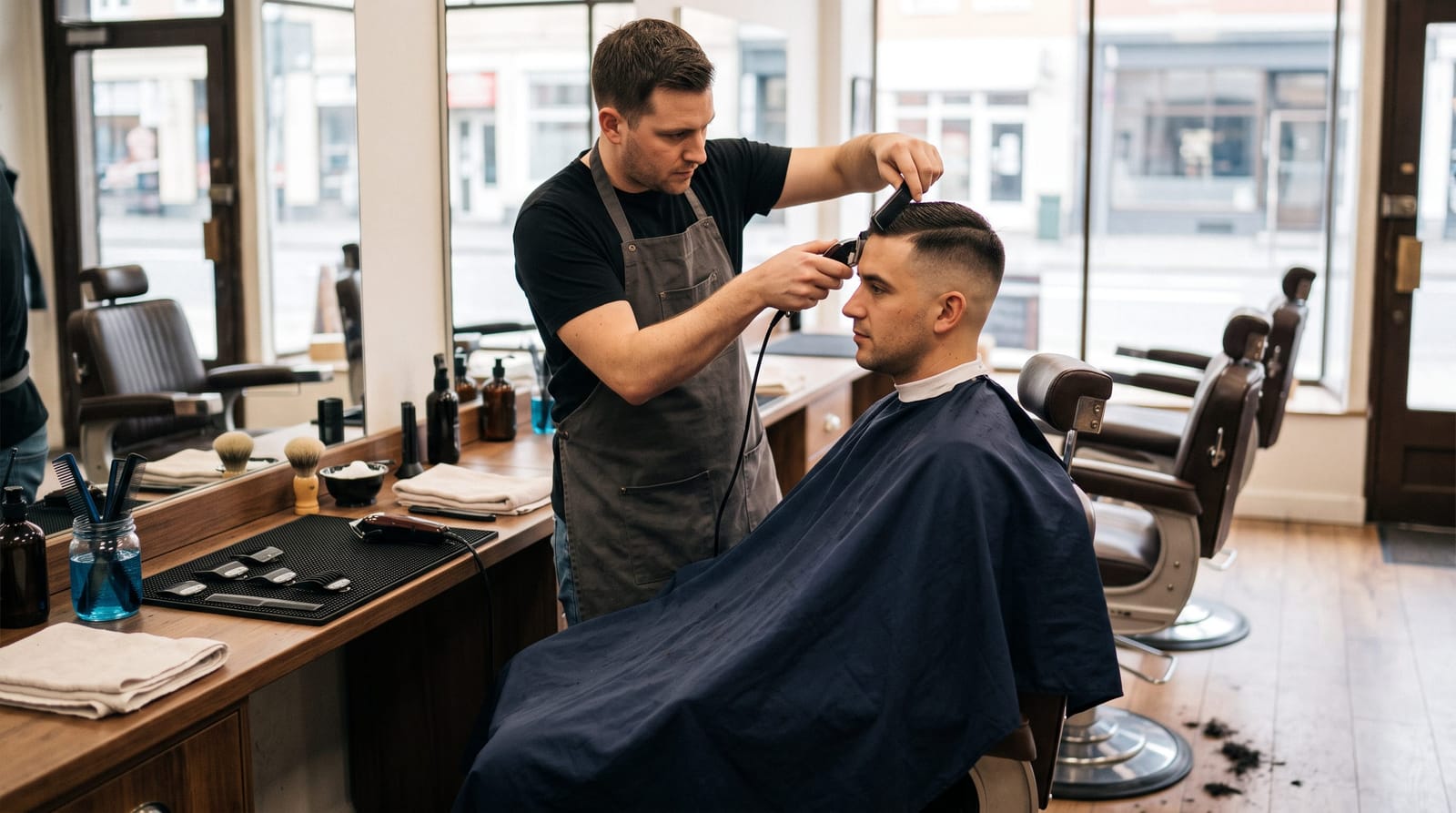
“Regular haircut” is a broad service label rather than one universal specification. It commonly means a conventional cut with visible hair on the sides and back, a shaped top, and a cleaned-up perimeter. The exact lengths and finishing details need clarification.
A barber may use clippers, scissors, or both to control bulk and connect the sides to the top. The goal is not necessarily to leave everything long; a regular cut can be short and precise without exposing skin across the lower sides.
For a closer look at the terminology, see what is a regular men's haircut. When discussing the service, specify whether you want your ears fully exposed, how much coverage you want at the temples, and whether the neckline should look softly tapered or more defined.
What makes a skin fade different
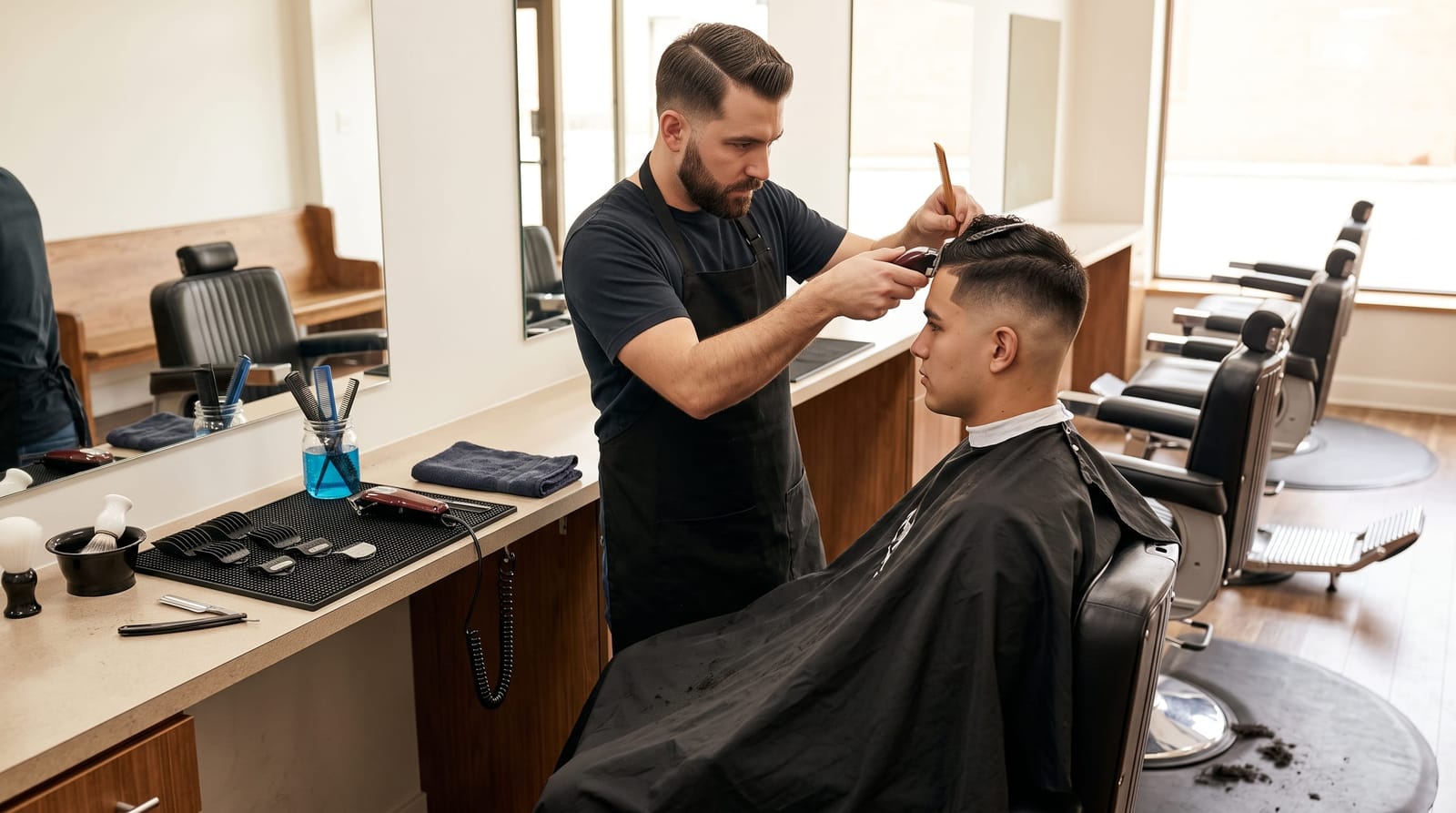
A skin fade reaches bare skin at its shortest point, then gradually builds length toward the top. Eddie’s explanation of skin fade lengths identifies that skin-level finish as the key distinction from a fade that retains very short hair.
The technical challenge is creating a controlled transition without a conspicuous band between the shaved area and the longer hair. The barber also has to decide how much weight to retain above the fade so the top does not appear disconnected unintentionally.
As Barber Industries explains in its guide to fading technique, a fade is a technique that can accompany different hairstyles. That is why “skin fade” alone is not a complete haircut request: the top still needs its own plan.
Appearance: Softer Shape vs. Sharper Contrast
A regular haircut keeps more visible hair around the head, which gives the barber room to build a softer silhouette. It can work well when you prefer a side part, natural texture, or a look that does not rely on a clearly shaved area.
A skin fade exposes more of the lower sides and back. That contrast can make the top’s texture and outline more prominent, but the result does not have to be dramatic.
- Low skin fade: Keeps the skin-level transition lower, preserving more coverage higher on the sides.
- Mid skin fade: Brings the transition higher for a more noticeable balance of exposed skin and retained hair.
- High skin fade: Removes coverage farther up the sides for a more pronounced contrast with the top.
These labels are useful starting points, not exact measurements. Pointing to where you want the transition to sit is clearer than relying on “low” or “high” alone.
If you like your current top but want a cleaner contrast, changing only the sides may be enough. The male skin fade haircut guide explores the options to discuss before making that change.
Maintenance: Grow-Out Matters More Than the First-Day Photo
A regular cut can be more forgiving of changing plans
Because a regular haircut begins with hair coverage on the sides, its identity does not depend on keeping those areas bare. Growth can still add unwanted bulk around the ears, temples, or neckline, but there is no skin-level finish to preserve.
This makes it a practical option if your schedule varies or you prefer to book a haircut when the overall shape needs attention rather than when the shortest area starts filling in.
A skin fade has a more noticeable freshness window
Once hair becomes visible in the shaved area, a skin fade no longer has precisely the same contrast it had immediately after the cut. That does not mean it looks bad; it means the finish changes.
Instead of treating a fixed appointment interval as a rule, decide what matters to you. Is it keeping the sides visibly skin-close, keeping the blend tidy, or simply preventing the top from losing shape? Those are different maintenance standards.
For example, someone who wants consistently bare lower sides may seek refreshes sooner than someone comfortable letting the fade soften. That is a preference, not a measure of whether the haircut was successful.
Styling: The Top Usually Decides the Daily Work
A skin fade is not automatically wash-and-go, and a regular haircut is not automatically high-maintenance. The top’s length, growth direction, and intended finish often determine how much styling is involved.
- Short textured top: Can suit either cut when you want a simple, deliberately tousled finish.
- Side part: Works with retained side coverage or faded sides; the difference is the amount of contrast.
- Longer swept-back top: May involve more drying and shaping, regardless of how short the sides are.
- Natural curls: Need a top shape that works with their pattern rather than a plan based only on fade height.
Start the consultation with how you actually style your hair. “I let it dry naturally” gives the barber different information from “I use a dryer every morning.” Ask for the finish to be demonstrated so you can judge whether the routine fits your day.
Face Shape and Hair Type: Adjust the Proportions, Not Just the Label
Use face shape as a guide, not a restriction
Think about the silhouette you want rather than assuming one face shape requires one haircut. Retained side coverage can add visual width; removing it can draw more attention toward the top. Height above the forehead also changes the overall proportions.
If you want to avoid an elongated appearance, discuss a lower top and some retained side weight. If you prefer a narrower-looking outline, ask how reducing side bulk would affect the balance. These are visual choices, not universal rules.
A reference photo helps, especially when you explain which feature you like. For more on those decisions, explore men's haircuts for face shape.
Match the cut to how your hair behaves
- Fine or lower-density hair: Compare how much coverage you want to retain. Very short sides create contrast, but they do not add density to the top.
- Thick hair: Discuss where bulk builds up. Both cuts need deliberate weight control rather than simply shorter sides.
- Curly or coily hair: Specify the desired shape and length on top. A fade can frame that shape, while a regular cut can retain a fuller outline.
- Straight hair with strong growth patterns: Point out areas that stick out or resist your part. Taking them shorter is not always the only way to manage the shape.
The useful question is: “What will this length do with my natural texture?” That leads to a more tailored discussion than choosing from a haircut name alone.
Cost: Compare the Service and the Upkeep
There is no universal price difference between a regular haircut and a skin fade. A skin-level blend involves detailed finishing, but each shop determines its own service categories and pricing. Do not assume either cut costs more without checking the current menu.
For a useful comparison, ask what each service includes: cutting and shaping the top, finishing the perimeter, and styling may be described differently across menus. Also ask whether a maintenance visit is a separate service rather than assuming a reduced-price refresh exists.
The ongoing difference depends partly on your preferences. A cut you want refreshed frequently involves more visits than one you are comfortable growing out. Compare the service you actually intend to book, not just the lowest listed haircut price.
Which Cut Fits Your Routine?
Lean toward a regular haircut if you value retained coverage, softer contrast, and a shape that does not depend on freshly shaved sides. It is also a useful starting point if you want a change without exposing much more skin.
Lean toward a skin fade if you like a defined skin-to-hair transition and are comfortable with that contrast softening between visits. A low skin fade offers a way to keep more upper-side coverage while introducing the skin-level finish.
For a hypothetical example, someone who likes a natural side part and an unpredictable appointment schedule might prefer a regular cut with neatly tapered edges. Someone who enjoys a sharply framed textured crop might choose a skin fade while keeping the same top length.
Before your next haircut, bring a reference photo and be ready to explain three things: how much skin you want visible, how you wear the top, and what grow-out you are comfortable with. For a convenient walk-in at Florida Fadez in Fort Lauderdale, bring those preferences along and discuss a clean, fresh cut that fits your routine.